Latest Stock Market Trends & Analysis
Expert insights, market analysis, and investment strategies to help you make informed decisions.

The Future of Algorithmic Trading in Retail Investing
The landscape of retail investing is undergoing a profound transformation, driven by the increasing accessibility of algorithmic trading tools. Once the exclusive domain of hedge funds and investment banks, algorithmic trading is now becoming available to individual investors through user-friendly platforms and services. This democratization is reshaping how retail investors approach the market, offering new opportunities and challenges.Algorithmic trading, once the exclusive domain of sophisticated institutional investors, is rapidly becoming accessible to retail investors through innovative platforms and technologies. This democratization is fundamentally changing how individual investors interact with financial markets and construct their trading strategies.The evolution of retail algorithmic trading has been driven by several converging factors. Advances in cloud computing have dramatically reduced the computational costs associated with running complex trading algorithms. Meanwhile, commission-free trading platforms have eliminated transaction cost barriers, making high-frequency strategies viable for smaller portfolios.Modern algorithmic trading platforms designed for retail investors offer varying levels of complexity and customization. Some provide pre-built strategies that can be deployed with minimal technical knowledge, while others offer visual programming interfaces that allow users to construct custom algorithms without extensive coding experience. The most advanced platforms provide full programming environments for experienced developers to create sophisticated trading systems.Machine learning approaches are increasingly integrated into retail trading algorithms. These systems can analyze vast datasets to identify patterns and relationships that might escape human observation. Natural language processing algorithms can interpret news, social media sentiment, and corporate disclosures to generate trading signals based on information beyond price and volume data.Risk management remains a critical consideration in algorithmic trading. Retail platforms are incorporating sophisticated risk controls including position sizing rules, stop-loss mechanisms, and portfolio-level risk metrics. These safeguards are essential for preventing catastrophic losses that can result from algorithmic errors or unexpected market conditions.Backtesting capabilities have become more sophisticated and accessible, allowing retail investors to evaluate algorithmic strategies against historical data before deploying real capital. However, the limitations of backtesting—including overfitting risks and the inability to account for how algorithms might impact markets when widely adopted—remain important considerations.Regulatory frameworks are evolving to address the growing prevalence of algorithmic trading among retail investors. Questions around market stability, fairness, and investor protection are prompting regulators to consider new approaches to oversight in this rapidly changing landscape.The social dimension of algorithmic trading has emerged as retail investors share strategies, collaborate on development, and even copy each other's algorithms through various platforms. This community aspect represents a significant departure from the secretive approach traditionally associated with quantitative trading.Looking ahead, the continued democratization of algorithmic trading is likely to influence market structure, potentially increasing efficiency while also introducing new forms of volatility. For retail investors, the key challenge will be developing the knowledge and discipline to effectively leverage these powerful tools while avoiding their potential pitfalls.
Latest Market Insights
Stay informed with our expert analysis and market trends

The Rise of AI in Stock Market Analysis
How artificial intelligence is revolutionizing the way investors analyze market trends and make decisions.
Alex Morgan
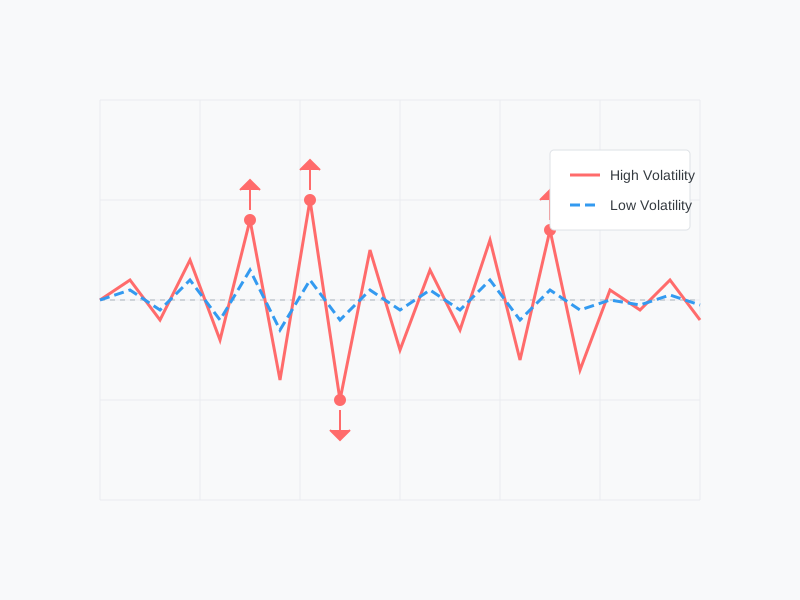
Understanding Market Volatility in 2023
A deep dive into the factors causing increased market volatility this year and strategies to navigate uncertain times.
Sarah Chen
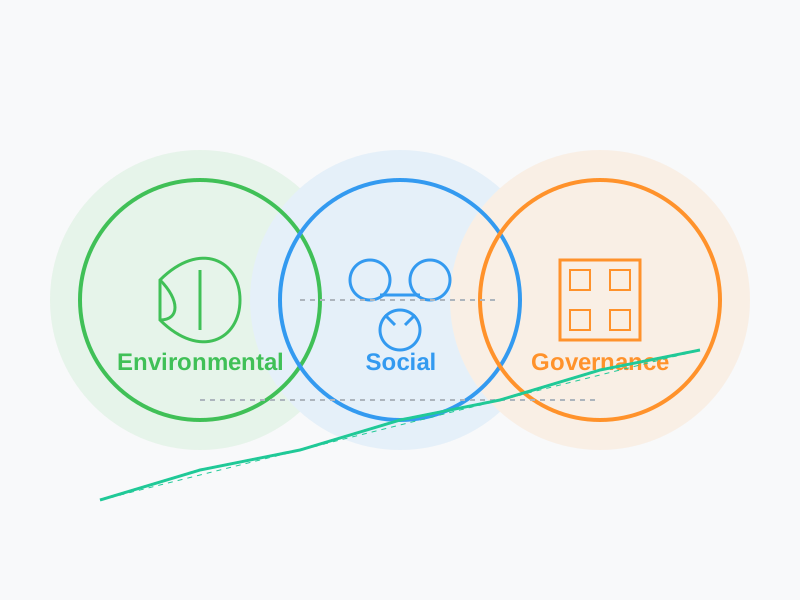
ESG Investing: The New Frontier
How environmental, social, and governance factors are becoming crucial in investment decisions and portfolio management.
Michael Johnson
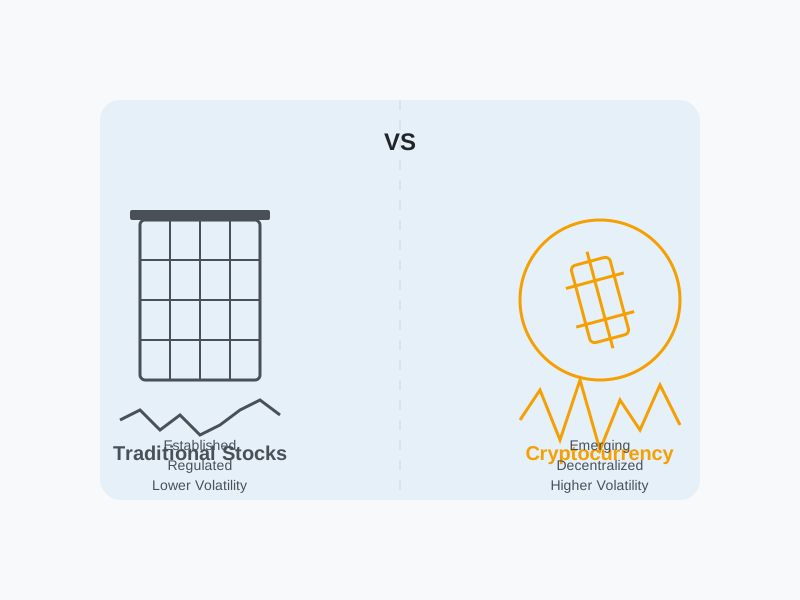
Cryptocurrency vs Traditional Stocks: A Comparison
Analyzing the differences, risks, and potential returns between investing in cryptocurrencies and traditional stock markets.
Lisa Wong
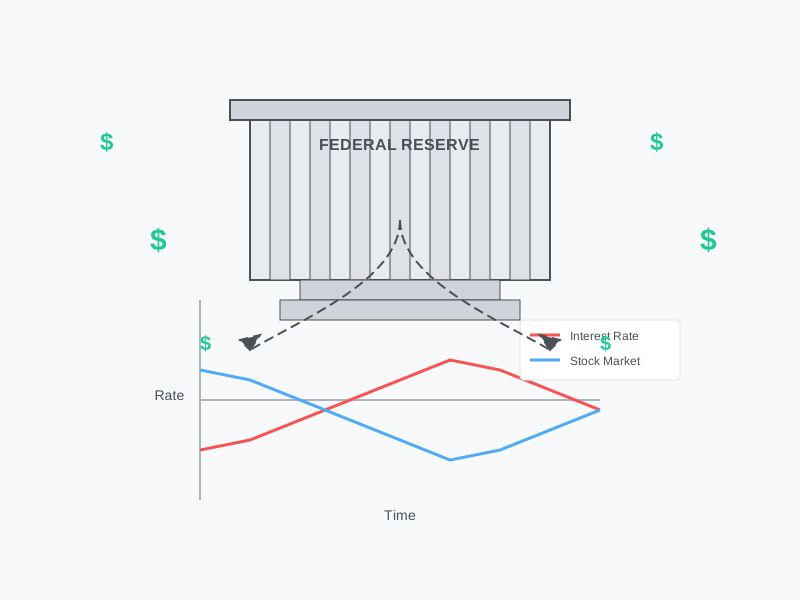
The Impact of Federal Reserve Decisions on Stock Markets
Understanding how Federal Reserve policy changes affect market dynamics and investment strategies.
David Park
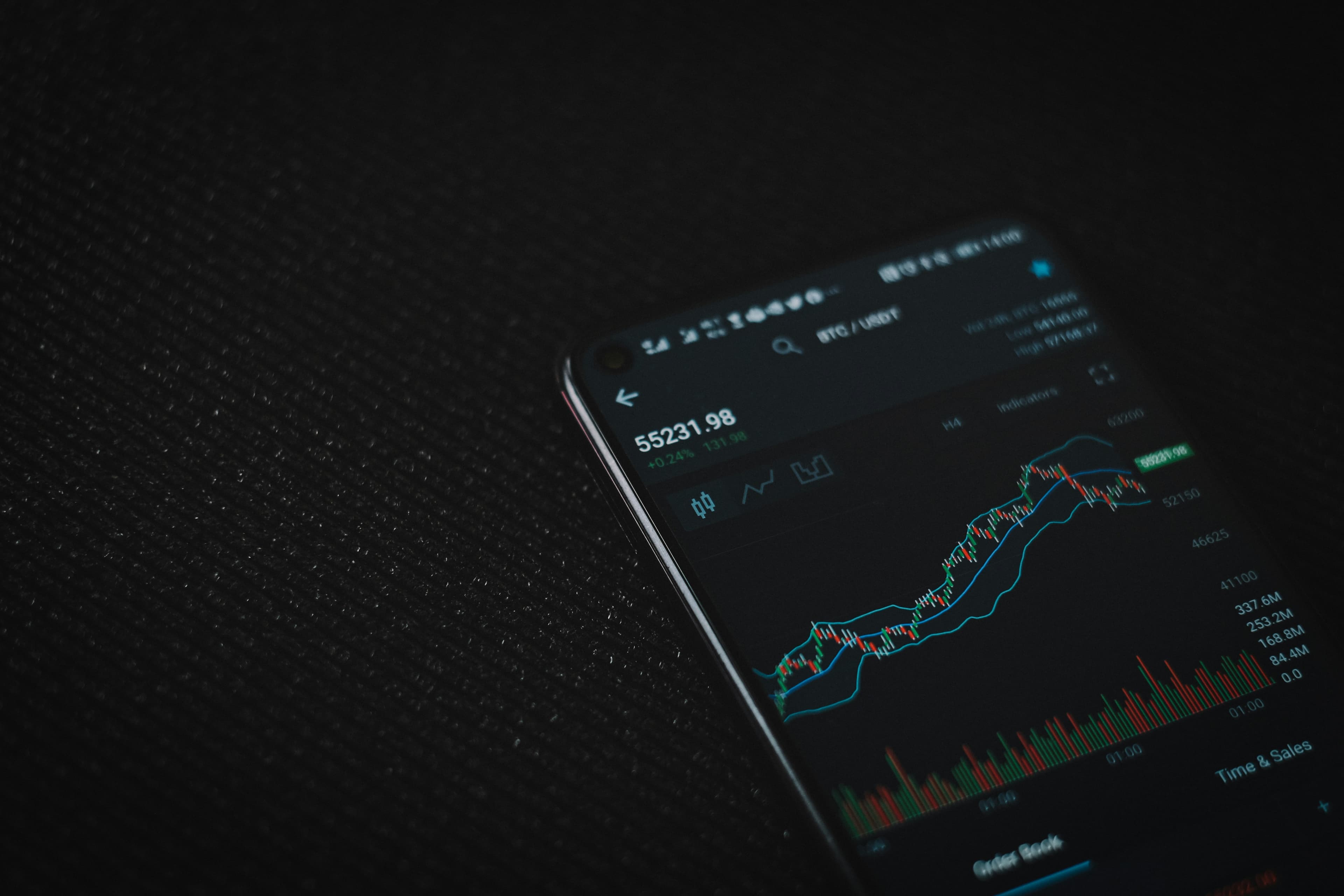
Tech Stocks: Bubble or Sustainable Growth?
Examining the current valuation of technology stocks and whether we're witnessing a bubble or sustainable market growth.
Emma Rodriguez
The Future of Algorithmic Trading in Retail Investing
How advanced algorithms and machine learning are democratizing trading strategies once reserved for institutional investors.
James Wilson

NVIDIA, Tesla, and Apple: The 2024 Stock Market Titans Reshaping Investment Strategies
Deep dive into the three most influential stocks of 2024 - analyzing NVIDIA's AI dominance, Tesla's robotaxi revolution, and Apple's resilience amid market volatility.
David Chen
Popular Categories
Stay Updated with Market Trends
Subscribe to our newsletter for weekly insights, analysis, and investment opportunities.